
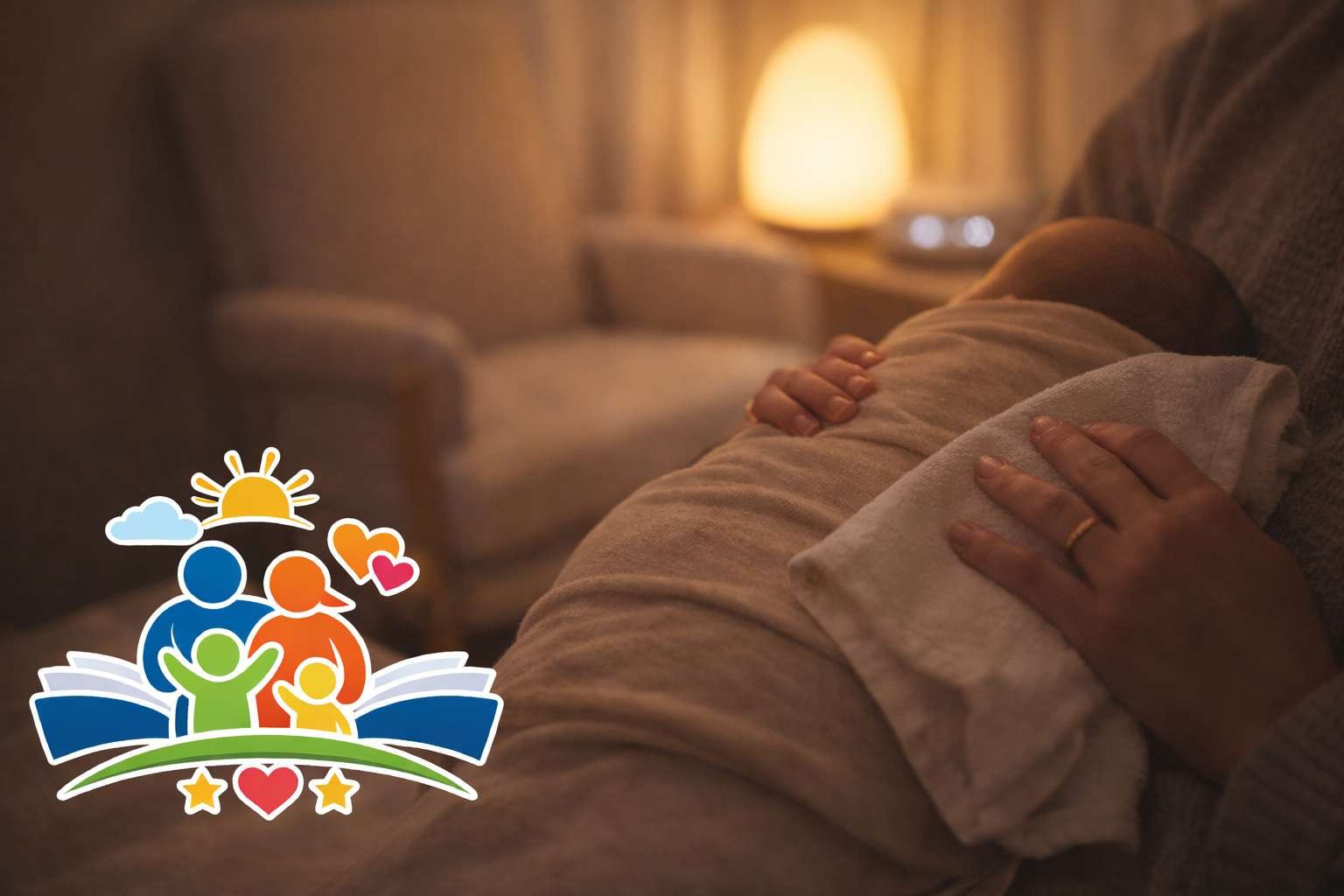
Crying is the newborn’s loudest form of communication, and right now it’s a flashpoint in modern parenting culture. People are told to “trust instincts,” then flooded with conflicting advice, product noise, and fear-driven warnings. In that pressure cooker, a crying spell can feel like a personal failure.
But the truth sits in plain sight: most newborn crying is normal, and most calming comes from rhythm, repetition, and steady hands. Parenting tips that actually work tend to be boring in the best way—small checks, simple comforts, and calm resets that keep you from spiraling when the baby won’t settle.
Why crying can hijack your nervous system
A newborn’s cry is designed to cut through everything. It’s sharp, repetitive, and hard to ignore, which is the point. The problem is what it does to the adult body: heart rate jumps, breathing gets shallow, thoughts get loud.
In that moment, trying to calm crying newborns becomes less about the baby and more about the caregiver’s internal alarm system. Parenting tips often skip this part, as if you can think clearly while your brain is firing off danger signals.
Start by noticing the pattern: when you feel panic rising, your movements get faster and rougher. You offer too many things too quickly. The baby senses that change, and the cycle tightens.
One grounded move breaks it: slow down your hands first. Not later. Now. Calm hands lead to calm pacing, and calm pacing is the start of calm crying newborns becoming possible again.
The fast check that prevents frantic guessing
When the crying spikes, the mind wants a single reason. Hunger. Gas. Pain. “Something wrong.” Real life is messier. Newborns cry for stacked reasons—slightly hungry, slightly tired, slightly uncomfortable, all at once.
A quick scan keeps you from chasing ghosts. Diaper. Temperature. Position. Hunger cues. Burp attempt. A look at fingers and toes for a wrapped hair or tight seam. This takes under a minute when you’ve practiced it.
Parenting tips that work don’t romanticize it; they standardize it. You’re building a repeatable sequence so you can calm crying newborns without inventing a new plan each time.
If the basics check out, you move to soothing rather than troubleshooting. That shift matters. It stops the “I’m failing” narrative that fuels panic.
And yes, this applies when you’re trying to calm crying newborns at night without overstimulation. Dim light. Minimal talking. Same scan, same order.
Holding and movement that settle babies, not just distract them
Some soothing looks busy but doesn’t settle the body. The goal is regulation, not entertainment. Newborns tend to calm when their sensory world gets simpler: steady pressure, gentle motion, a predictable sound.
Try firm, secure contact—baby’s chest against yours—then a slow sway. Not bouncing. Not pacing like a metronome you can’t stop. Slow, even movement gives the nervous system something consistent to lock onto.
This is where calm crying newborns with swaddle and side hold often becomes real. A snug swaddle (hips flexible, not pinned) and a supported side or semi-prone hold can reduce flailing, which reduces crying intensity. Parenting tips can be flashy, but physics is quieter: less startle, less chaos.
If the baby fights swaddling, don’t escalate. Try hands-on containment instead—your palm across the chest, gentle pressure, steady breathing. Calm crying newborns when nothing seems to work sometimes starts with removing extra stimulation rather than adding more.
Feeding and gas: calming without overfeeding
A lot of crying clusters around feeding windows, and panic makes adults push more milk as a solution. Sometimes that helps. Sometimes it backfires, especially if air swallowing is part of the problem.
If you’re trying to calm crying newborns after feeding with gentle burping, think slow and structured. Upright hold. Gentle back pats. Small pauses. If you rush, you add air and irritation.
Look for the cues: rooting and searching can mean hunger, but it can also mean “I want comfort and I don’t know how else to ask.” Parenting tips that treat every cry as hunger create a loop of snack-feeding and upset bellies.
This is also where calm crying newborns without using pacifiers comes up for families who prefer not to. Non-nutritive sucking is calming, but it doesn’t have to be a pacifier. A clean finger can work in the early days if done safely and briefly, especially while you reset your own breathing.
If spit-up is heavy, or feeding seems painful, don’t diagnose on vibes. Track it. Mention it to the pediatric clinician. Calm crying newborns with colic-like symptoms safely requires humility: sometimes the right move is getting support, not powering through alone.
Overstimulation and the evening “witching hour”
Many newborns ramp up in late afternoon and evening. It’s not a myth. It’s also not always colic. It’s often a daily build-up: light, noise, handling, and imperfect naps stacking until the baby’s system runs hot.
This is when calm crying newborns during witching hour evenings becomes less about a magic trick and more about lowering input. Dim room. Fewer voices. Slow movement. A single repetitive sound.
White noise can help because it masks sudden changes. Calm crying newborns with white noise and dim lights works best when the volume is reasonable and the environment stays boring. Parenting tips that push constant switching—rock then bounce then sing then walk—often keep the baby alert.
Sometimes the baby will cry through the wind-down no matter what. Your job becomes making it safe and steady. You’re not auditioning for perfection. You’re holding the line.
Public moments: staying calm when eyes are on you
A crying baby in public turns into social pressure. People stare. Someone offers advice you didn’t request. Your face heats up. Now you’re trying to calm crying newborns and calm yourself while performing composure.
Pick one plan and run it quietly. Find a calmer corner. Reduce stimulation. Hold firmly. Rock slowly. Keep your voice low or skip talking entirely. The baby doesn’t need an explanation; the baby needs regulation.
Calm crying newborns in public without panic is easier when you accept one blunt truth: you don’t owe strangers a smooth scene. Parenting tips sometimes ignore the emotional side of being watched. But social stress changes your body language, and babies read that.
If you’re alone and overwhelmed, it’s okay to step outside, sit down, and reset. The public doesn’t get to decide what “good parenting” looks like in a ten-minute snapshot.
The caregiver reset that prevents panic spirals
There’s a reason calm people calm babies. Newborns respond to muscle tone, breathing, and pace. If you’re shaking inside, the baby can’t “logic” their way out of distress.
So you reset. Feet planted. Shoulders down. Exhale longer than you inhale. Count the breaths if you have to. This isn’t a wellness slogan; it’s a mechanical way to lower your own alarm response.
Parenting tips that pretend adults are machines do damage. You’re a body in the room, and your body is part of the environment. Calm crying newborns often starts with calm breathing, even if the baby is still loud.
If you feel yourself reaching a breaking point, put the baby in a safe place—crib, bassinet—step back for a moment, and return with steadier hands. That’s not quitting. That’s keeping it safe.
Calm crying newborns while recovering from C-section can be especially hard because pain spikes with movement. Set up stations: diapers, swaddles, burp cloths within reach. Less strain means less panic.
Conclusion
Crying will keep happening. That’s the honest part. The win is not eliminating every cry; it’s staying functional while you respond. Calm crying newborns is a practice, not a personality trait.
The best parenting tips are the ones you can repeat at 3 a.m. with half a brain: quick check, lower stimulation, firm hold, slow movement, steady sound, and a caregiver reset when panic starts rising. Some nights it works fast. Some nights it doesn’t, and you still did the right thing by keeping the environment safe and consistent.
When something feels off—painful feeding, weak crying, fever, unusual sleepiness—treat that as a separate lane and get clinical advice. The rest is the daily work of caring for a brand-new nervous system. And you, too.
Can parenting tips help calm crying newborns in minutes?
Yes, parenting tips can shorten episodes by making your response consistent. Calm crying newborns often improves with one routine, not constant switching.
What parenting tips work best for calm crying newborns at night?
Keep it dim and quiet. Parenting tips that reduce stimulation help calm crying newborns at night without turning wake-ups into playtime.
Are parenting tips different for calm crying newborns after feeding?
They can be. Parenting tips focused on burping and upright holding often calm crying newborns after feeding when gas is involved.
Do parenting tips help calm crying newborns during the witching hour?
They help, but results vary. Parenting tips that lower noise and light can calm crying newborns during witching hour evenings.
Which parenting tips support calm crying newborns without pacifiers?
Use steady holding, swaddling if tolerated, and calming sound. Parenting tips can calm crying newborns without pacifiers by replacing sucking with rhythm.
Can parenting tips calm crying newborns when nothing seems to work?
Sometimes the goal is containment and safety, not silence. Parenting tips still matter because calm crying newborns can take time.
What parenting tips help calm crying newborns in public places?
Find a quieter spot and slow your movements. Parenting tips that reduce your own stress help calm crying newborns in public without panic.
Are parenting tips useful for calm crying newborns with colic-like symptoms?
They may reduce intensity, but not always duration. Parenting tips can support calm crying newborns with colic-like symptoms safely alongside medical input.
Do parenting tips about white noise really calm crying newborns?
Often, yes. Parenting tips that use white noise and dim lights can calm crying newborns by smoothing sudden environmental changes.
How can parenting tips help calm crying newborns if I feel panic?
Start with your breathing and slower hands. Parenting tips work better when you’re steady, making calm crying newborns more likely.
Can parenting tips help calm crying newborns while I’m exhausted?
They can, because repetition reduces decision fatigue. Parenting tips create a default path to calm crying newborns when your brain is drained.
What parenting tips are safest if I’m worried about shaking?
Put the baby down safely and step back briefly. Parenting tips prioritize safety so calm crying newborns doesn’t become a dangerous moment.
Do parenting tips change for calm crying newborns in the first week?
They’re simpler early on. Parenting tips focus on feeding, warmth, and containment to calm crying newborns in those raw first days.
Which parenting tips help calm crying newborns during diaper changes?
Warm hands, quick movements, and a snug wrap after. Parenting tips reduce exposure time, which can calm crying newborns fast.
Can parenting tips calm crying newborns if the baby is overtired?
Sometimes, yes, by lowering stimulation and using steady rhythm. Parenting tips can calm crying newborns enough to allow sleep.
Do parenting tips help calm crying newborns if the baby is underfed?
They may not. Parenting tips can’t replace adequate feeding, and calm crying newborns may require a feeding plan check.
What parenting tips help calm crying newborns with reflux signs?
Keep the baby upright after feeds and avoid fast overfeeding. Parenting tips may calm crying newborns, but persistent symptoms need clinicians.
Can parenting tips calm crying newborns during growth spurts?
They can reduce chaos, not remove hunger. Parenting tips help calm crying newborns by keeping feeds and soothing structured.
Which parenting tips work for calm crying newborns with a strong startle reflex?
Swaddling or firm containment helps. Parenting tips that reduce startling often calm crying newborns quickly.
Do parenting tips help calm crying newborns in a noisy home?
Yes, by creating a calmer micro-space. Parenting tips like white noise can calm crying newborns even when the house is active.
What parenting tips help calm crying newborns without constant rocking?
Try steady pressure and sound instead of motion. Parenting tips can calm crying newborns with less movement when caregivers are tired.
Can parenting tips calm crying newborns if I’m recovering from C-section?
Yes, with setup and minimal lifting. Parenting tips can calm crying newborns while protecting your healing body.
Which parenting tips help calm crying newborns when visitors are around?
Limit handling and keep the room quiet. Parenting tips reduce stimulation so calm crying newborns doesn’t escalate.
Do parenting tips help calm crying newborns if the cry sounds unusual?
Use parenting tips for immediate comfort, but treat unusual cries as a cue to check health. Calm crying newborns should not override safety concerns.
Can parenting tips calm crying newborns long-term, not just once?
Yes, consistency builds predictability. Parenting tips repeated daily often make calm crying newborns easier across weeks.

