
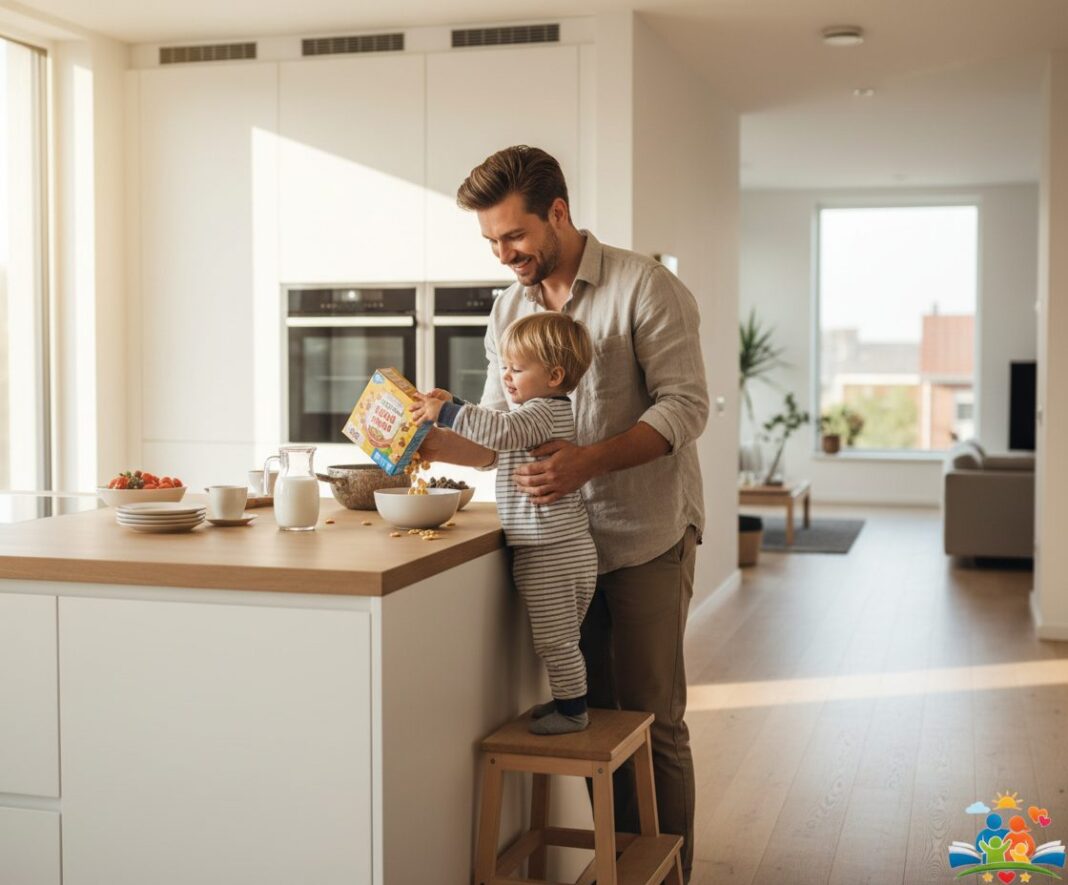
Morning cues that reduce friction start before the first request. A predictable wake-up rhythm changes the whole temperature of the day, especially when a toddler is testing limits and timing. The point isn’t perfection. It’s lowering the number of “hard stops” that force a power struggle.
Daily routines that improve toddler cooperation work best when they feel ordinary, not like a program. A child relaxes into what happens next, and you spend less energy negotiating basics. Parenting tips often miss that cooperation is usually a pacing issue, not an obedience issue. Parenting tips that land in real homes tend to sound simple because they are.
Daily routines that improve toddler cooperation begin with what you do consistently, even when you’re tired. Parenting tips matter most in those tired moments. Parenting tips don’t need to be loud to be effective.
Build a calm start that doesn’t begin with demands
The first ten minutes after waking can decide the day’s tone. If the morning begins with rapid instructions—get up, get dressed, eat now—your toddler may resist simply to regain control. Daily routines that improve toddler cooperation often start with connection, not commands.
Try a “warm-up window.” A short cuddle, a favorite song, opening curtains together, even walking to the bathroom holding hands. Small, but it signals safety. Then the first request lands softer.
Keep choices narrow and real. Two shirts, not the whole drawer. One bowl option, not an open negotiation. Parenting tips work when they reduce decision fatigue for everyone, including you.
If mornings are chaotic, move decisions to the night before. Set clothes out. Prep a simple breakfast base. Daily routines that improve toddler cooperation usually succeed because they remove time pressure, the hidden driver behind most meltdowns.
Use transition rituals instead of surprise switches
Toddlers don’t hate change. They hate sudden change. The jump from play to shoes, from bath to bed, can feel like being yanked mid-thought. Daily routines that improve toddler cooperation rely on predictable bridges.
A ritual can be tiny: the same phrase before leaving the park, the same two-minute timer, the same “first/then” wording. Consistency matters more than creativity. When the cue repeats, your toddler’s brain starts preparing before you even ask.
Avoid stacking transitions. Don’t announce three moves at once. One step, then the next. You’re not lowering standards; you’re matching their processing speed.
Parenting tips that focus only on consequences skip this. The real win is fewer battles because the shift feels expected. Daily routines that improve toddler cooperation make transitions feel like a known path, not a cliff edge.
Make cooperation easier with the environment, not lectures
A toddler’s behavior often reflects the room more than the child. Shoes hidden in a high closet, snacks visible on the counter, toys everywhere—these are cooperation traps. Daily routines that improve toddler cooperation usually start with layout.
Put the “yes” items within reach. A low drawer of weather-appropriate clothes. A small basket of car toys near the door. A step stool placed where handwashing happens. Then you’re not constantly policing access.
Use visual order without turning the home into a classroom. Labels can help, but simple grouping does more: pajamas in one bin, socks in another, bath items together. Your toddler learns the routine through repetition and proximity.
Parenting tips tend to over-credit words. Toddlers respond to what’s easy. Daily routines that improve toddler cooperation quietly remove the need for constant correction.
Anchor the day with predictable food and sleep rhythms
Many “attitude problems” are hunger and exhaustion wearing a disguise. The toddler who refuses shoes may be running on fumes. Daily routines that improve toddler cooperation treat food and sleep like structural supports, not optional extras.
Aim for steady spacing. If breakfast slides late, everything downstream gets shaky. Snacks work best when they’re expected, not used to buy peace mid-meltdown. That pattern can teach your toddler that chaos pays.
Sleep timing matters even more than total sleep. A late nap can wreck bedtime, and a wrecked bedtime can ruin the next morning. If you keep one thing stable, make it sleep.
Parenting tips sometimes sell magic phrases. The more reliable approach is boring: consistent fuel, consistent rest. Daily routines that improve toddler cooperation thrive on boring.
Turn tiny responsibilities into pride, not pressure
Toddlers cooperate more when they feel useful. Not praised like a performer—trusted like a member of the household. Daily routines that improve toddler cooperation often include small jobs baked into the day.
Let them carry the wipes to the car. Let them pour pre-measured cereal. Let them put their cup in the sink. These tasks slow you down slightly, but they reduce resistance later because the day isn’t just adults directing traffic.
Keep it low-stakes. If they spill, you don’t turn it into a lecture. You hand them a cloth and move on. The goal is participation, not perfection.
Parenting tips that lean on “good job” for everything can backfire. Quiet acknowledgement works: “You did it.” Daily routines that improve toddler cooperation build identity—someone who helps, someone who can.
Use consistent language that doesn’t invite debate
A toddler will argue forever if the door is open. Your wording decides whether it’s open. Daily routines that improve toddler cooperation often depend on short, repeatable phrases.
Use fewer words, not bigger ones. “Shoes on.” “Hands washed.” “In the car seat.” Then pause. A lecture sounds like a negotiation because it contains options and emotion.
When you must explain, do it after the moment passes. During the moment, your calm tone is the message. If you repeat yourself, repeat the same sentence, not a new version. New versions sound like bargaining.
Parenting tips often focus on what to say; the delivery matters more. Daily routines that improve toddler cooperation keep language steady so your toddler knows you mean it, without you escalating.
Plan for predictable flashpoints and pre-load support
Every family has the same daily ambush points: leaving the house, coming home, dinner, bedtime. Daily routines that improve toddler cooperation don’t pretend these flashpoints disappear. They plan around them.
Before the supermarket, feed the toddler. Before the car, let them choose a small “car item.” Before bedtime, do wind-down earlier than you think you need. You’re not giving in. You’re recognizing patterns.
Offer a preview that’s concrete. “Two more slides, then we go.” Or “After this song, we brush teeth.” A toddler can’t cooperate with an unclear horizon.
Parenting tips get practical here because it’s about logistics. Daily routines that improve toddler cooperation are often just smart logistics, repeated.
End the day with closure, not a crash landing
Bedtime isn’t just sleep prep; it’s emotional cleanup. A toddler who felt pushed all day will fight the final separation. Daily routines that improve toddler cooperation give the day a soft landing.
Keep the sequence consistent: bath, pajamas, books, lights. Not elaborate, just steady. If you add new steps, add them carefully. Too many elements can make bedtime feel like a performance with no finish line.
Give a brief recap in simple language. “You played outside. You helped with socks. You were upset at lunch, then you calmed down.” This isn’t therapy talk. It’s closure. It helps toddlers file the day away.
Parenting tips that chase bedtime tricks miss the bigger point: a toddler settles when the day felt understandable. Daily routines that improve toddler cooperation make the day understandable.
Conclusion
Daily routines that improve toddler cooperation aren’t about controlling a child; they’re about removing the conditions that produce constant conflict. The most effective changes look almost dull from the outside—steady mornings, predictable transitions, fewer rushed moments.
Parents often notice the shift in an unexpected place: their own voice gets quieter. Parenting tips can sound abstract until you feel that quiet arrive. Parenting tips are supposed to make life lighter, not more complicated.
Daily routines that improve toddler cooperation keep working because they fit real days, including messy ones. And that’s usually where cooperation finally shows up.
What if daily routines that improve toddler cooperation stop working suddenly?
Toddlers change fast. Keep the routine, adjust expectations, and check sleep, hunger, or new stressors. Often it’s development, not defiance.
How long before daily routines that improve toddler cooperation feel easier?
Many families notice small shifts within a week. Bigger changes often show up after two to three weeks of steady repetition.
Can daily routines that improve toddler cooperation work with a strong-willed toddler?
Yes, sometimes even better. Strong-willed toddlers need predictability and control points. Offer small choices inside a fixed routine.
What’s the quickest morning habit to improve cooperation?
Start with connection before commands. A two-minute cuddle, song, or shared task can reduce resistance to the first request.
Do daily routines that improve toddler cooperation reduce tantrums or just move them?
They usually reduce frequency and intensity. Tantrums still happen, but fewer come from surprise transitions and rushed moments.
How can Parenting tips fit when schedules change each week?
Anchor two things: wake-up rhythm and bedtime rhythm. Keep those steady while the middle of the day flexes.
What if my toddler refuses every transition, even with warnings?
Shorten the warning and make it consistent. Use the same cue, same timing, and fewer words. Too much talk can trigger debate.
Are rewards part of daily routines that improve toddler cooperation?
They can be, but routine-driven pride works better. Let toddlers feel competent through small responsibilities instead of constant prizes.
How do I handle cooperation when siblings interrupt everything?
Give each child a predictable “turn.” Use micro-routines—shoes first for one child, then the other—to reduce competition.
What’s a simple bedtime routine that improves cooperation?
Same order nightly: bathroom, pajamas, two short books, lights out. Keep it brief and repeat it the same way.
Can screen time ruin daily routines that improve toddler cooperation?
It can disrupt transitions and sleep if poorly timed. If you use it, keep it predictable and end it with a clear cue.
Why do Parenting tips emphasize sleep so much?
Because sleep affects impulse control and mood. A rested toddler can cooperate; an exhausted toddler often can’t.
What if my toddler cooperates with one parent but not the other?
Consistency is usually the gap. Align phrases, timing, and boundaries so the routine feels the same, regardless of who leads it.
How do I keep routines without becoming rigid?
Keep the sequence, loosen the details. The order stays stable, but you allow small variations based on energy and context.
What are signs the routine is too complicated?
You’re explaining it a lot, adding steps, or rushing. If it needs constant reminders, it likely has too many moving parts.
How can daily routines that improve toddler cooperation help in public places?
Use portable rituals: a leaving phrase, a two-minute countdown, and a “car item.” Familiar cues travel well.
Should I explain rules during a meltdown?
Not much. Wait until calm returns. During the meltdown, your tone and consistency matter more than explanations.
How often should I change routines as my toddler grows?
Adjust every few months, not weekly. Keep the core rhythm steady and update responsibilities and choices as capacity increases.
Can daily routines that improve toddler cooperation help with potty resistance?
Yes. Predictable potty opportunities, no pressure, and easy access reduce battles. Treat it as routine, not a test.
What if mornings are the worst part of our day?
Prepare at night, slow the first ten minutes, and remove extra decisions. Morning cooperation improves when time pressure drops.
Do daily routines that improve toddler cooperation work during travel?
They help if you keep a few anchors: bedtime order, a familiar comfort item, and the same transition phrase for leaving places.
How do I use Parenting tips without feeling judged?
Use what fits your home and ignore what adds stress. The best Parenting tips reduce conflict, not increase guilt.
What’s the biggest mistake with toddler routines?
Changing the rule midstream. If you say “two more minutes,” follow it. Predictability is what makes routines powerful.
How can I rebuild cooperation after a tough week?
Return to basics: sleep timing, predictable meals, and simple transitions. Don’t add new rules—restore the old rhythm first.
Are daily routines that improve toddler cooperation different for daycare kids?
The same principles apply. Mirror daycare rhythms at home where possible, especially for meals and bedtime, to reduce friction.

