
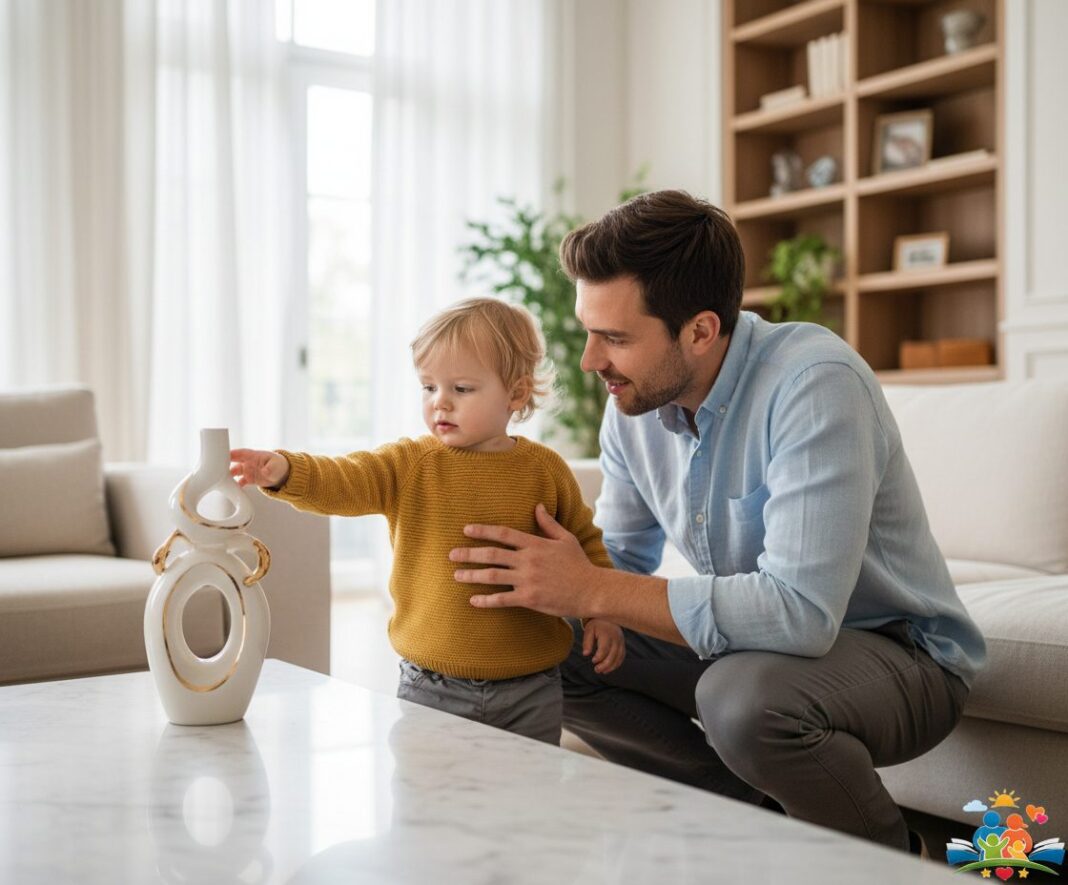
The loudest parenting debates right now aren’t about screens or sugar. They’re about control—who has it, who wants it, and why it melts down at 6:12 p.m. on a random Tuesday. Boundary testing sits at the center of that tension, because it looks like defiance but often isn’t.
Parenting tips don’t land in theory; they land in kitchens, car seats, and checkout lines. And when it happens in public, even calm adults start negotiating with their own nerves. The real question isn’t why toddlers push. It’s why it feels so personal.
Why toddlers test boundaries in the first place
Toddlers arrive in the world with a tiny body and a massive desire to influence it. When toddlers test boundaries, they’re not delivering a critique of your parenting style. They’re running experiments, because their brain is built for it.
They’re also learning where “me” ends and “you” begins. That line is fuzzy at two. So a toddler pulls a cup off the table not because they hate you, but because gravity plus your reaction equals information. The response becomes part of the lesson.
Parenting tips often talk about “limits,” but the deeper issue is predictability. Toddlers relax when the world behaves the same way twice. If rules change with your mood, they keep testing to find the real one.
And there’s the simplest driver: attention. Not the manipulative kind. The hungry-for-connection kind. When toddlers test boundaries and the room suddenly looks at them, the behavior gets reinforced even if nobody likes it.
The hidden skills toddlers are practicing when they push
It’s easy to describe boundary testing as misbehavior. But toddlers test boundaries while building skills adults rely on all day: persistence, negotiation, risk assessment, and emotional endurance. The problem is their version is loud.
Impulse control is still under construction. Their “stop button” works sometimes, then disappears when they’re tired or overstimulated. So they reach, grab, shout, bolt—then seem surprised by the consequences. That surprise is real.
They’re also practicing autonomy. Choosing the red cup instead of the blue one can feel like a survival-level need. Parenting tips that dismiss this as “just being difficult” miss the developmental engine underneath it.
Another hidden skill: social mapping. Toddlers test boundaries differently with different adults because they notice who is strict, who is playful, and who cracks under pressure. That’s not sinister. That’s social learning, messy and honest.
When boundary testing spikes: timing, fatigue, and environment
Patterns matter. Toddlers test boundaries more when their body is under stress—hungry, tired, sick, or overstimulated. A child who’s fine at 10 a.m. can unravel by late afternoon, then look “naughty” when they’re actually depleted.
Transitions are gasoline on this fire. Leaving the park, turning off the TV, buckling the car seat. Each shift is a small loss of control, and toddlers experience loss loudly. If you only see the outburst, you miss the trigger.
Crowded places amplify it. Noise, lights, strangers, and rushed adults make it harder for a toddler to regulate. That’s why the grocery store becomes a stage. Parenting tips that work at home can fail under fluorescent lighting and public pressure.
Expect boundary testing when routines break—travel, visitors, holidays. Even “fun” changes can overload a toddler’s system. The brain handles novelty by grabbing for control. So toddlers test boundaries to feel steady again.
The difference between limits and power struggles
Limits are calm. Power struggles are emotional bargaining with an audience. Toddlers test boundaries, and adults accidentally turn it into a contest by matching intensity.
A limit sounds like: “I won’t let you hit.” Full stop. No lecture, no courtroom speech. A power struggle sounds like: “How many times do I have to tell you? You’re being ridiculous.” That’s when the toddler learns the pathway to bigger reactions.
The sneaky part is that toddlers don’t need to “win” a power struggle to keep it going. They just need proof you’re engaged. If your tone changes and your body stiffens, the game is on.
Parenting tips that promise a “perfect phrase” miss the real lever: your emotional temperature. Limits work when you’re steady. The moment you start pleading, threatening, or debating, toddlers test boundaries harder because the boundary looks negotiable.
This doesn’t mean you become cold. It means you stop arguing with a two-year-old like they’re a bad coworker.
How to respond in the moment without escalating
When toddlers test boundaries, the first response should be physical and simple, not verbal and dramatic. Move the fragile item. Block the hit. Hold the boundary with your body before your words.
Keep language short. Toddlers don’t process long explanations mid-storm. One sentence lands. Five sentences become noise. “Hands stay gentle.” “Food stays on the plate.” Then you act.
Offer a clean choice only if you can accept either option. Otherwise it’s a trap. “You can walk to the bath or I’ll carry you.” Both lead to bath. That’s not manipulation; that’s structure.
Parenting tips often say “stay calm,” but calm has a technique: slow your pace, lower your volume, and reduce eye contact during the peak. Too much attention can feed the behavior. Connection comes after the wave passes.
And if you mess up—because everyone does—repair quickly. “I yelled. I’m sorry. We’ll try again.” That repair teaches more than a flawless performance ever could.
What consistency actually looks like at toddler age
Consistency doesn’t mean repeating the same speech every time. It means the rule and the outcome don’t wobble. When toddlers test boundaries, they’re checking for wobble.
If hitting leads to immediate separation from the target today, but tomorrow it becomes a long negotiation, your toddler learns the rule isn’t about hitting. It’s about how tired you are. That’s not a character flaw. It’s just what they observe.
Consistency also means adults align. When one parent laughs and the other gets angry, boundary testing becomes more frequent because the toddler is trying to solve a puzzle with moving pieces.
Parenting tips that focus only on “being firm” ignore the softer consistency: tone, timing, and follow-through. A gentle boundary that happens every time beats a harsh boundary that happens sometimes.
Also, adjust expectations. If you’re asking for 30 minutes of quiet during a dinner party, you’re building a boundary on sand. Consistency starts with choosing battles your toddler can realistically lose.
After the storm: teaching without lectures
The learning window opens after the meltdown, not during it. That’s when toddlers can hear you. When toddlers test boundaries and crash emotionally, their brain is flooded. Later, the brain is available again.
Debrief with tiny language. “You were mad when we left. Mad is okay. Hitting isn’t.” That’s a full lesson in two lines. Then you move on.
Practice the replacement behavior. Show what “gentle hands” means. Let them try it. Make it physical and specific. Toddlers learn by doing, not by being told.
Parenting tips sometimes frame consequences as punishment. But for toddlers, consequences should be informative. If they throw a toy, the toy rests. Not because you’re proving a point, but because throwing ends access.
Watch your own patterns, too. If boundary testing always happens during one daily moment, redesign the moment. A snack before pickup. A five-minute transition warning. Fewer demands when they’re already maxed out.
Building a home where boundaries feel safe, not harsh
A “safe” boundary is one that doesn’t change depending on who’s watching. Toddlers test boundaries less when they trust the wall won’t suddenly move.
Fill the day with small choices so the big boundaries don’t feel like constant control. Let them choose socks, a bedtime story, the spoon. Autonomy in harmless places reduces rebellion in the dangerous ones.
Use connection as prevention. Ten minutes of real attention—on the floor, following their lead—often lowers boundary testing later. Not always. But often enough to matter.
Parenting tips work best when they match the child in front of you. Some toddlers need more sensory movement, others need more predictability, others need fewer words. Boundaries aren’t one-size-fits-all; they’re a relationship tool.
And remember: toddlers testing boundaries isn’t a sign you’re losing. It’s a sign your toddler is growing into a person who wants influence. Your job is to keep that influence within safe edges.
Why do toddlers test boundaries so often?
Toddlers test boundaries to learn what stays firm, what changes, and how relationships work. It’s normal development, not a personal attack on you.
At what age do toddlers test boundaries the most?
Many toddlers test boundaries hardest between ages two and three, when language grows but impulse control still lags behind daily demands.
Does boundary testing mean my toddler is “defiant”?
Not usually. Toddlers test boundaries to explore control, attention, and predictability. Defiance is an adult label that often misses the real driver.
Should I punish a toddler for testing boundaries?
Harsh punishment tends to escalate. Clear limits plus immediate, simple consequences teach better. Parenting tips work when consequences are predictable, not emotional.
What’s the best immediate response to hitting?
Block the hit, separate calmly, and state the limit once. When toddlers test boundaries with aggression, speed and steadiness matter more than speeches.
How do I handle screaming in public?
Lower your own intensity, reduce words, and move to a quieter spot if possible. Public pressure makes toddlers test boundaries harder, so simplify.
Are time-outs effective for toddlers?
Short, calm breaks can help if they’re used as reset time, not shame. For toddlers test boundaries moments, connection after matters.
Why does my toddler ignore me the first time?
Toddlers often need processing time, especially when excited. When toddlers test boundaries, they also test whether you’ll repeat yourself endlessly.
Should I give warnings before transitions?
Yes, when possible. Predictable cues reduce spikes where toddlers test boundaries, especially leaving play, ending screens, or starting bedtime routines.
How can both parents stay consistent?
Agree on the rule and the consequence in advance. Toddlers test boundaries more when adults respond differently to the same behavior.
What if grandparents undermine boundaries?
Keep it simple: “This is our rule with him.” Toddlers test boundaries fastest where they sense adult disagreement and mixed signals.
Is it okay to distract my toddler?
Sometimes. Distraction is a tool, not a failure. When toddlers test boundaries from fatigue, redirecting can prevent a full meltdown.
How do I stop constant “no” battles?
Offer limited choices and reduce unnecessary rules. Fewer rules held firmly helps more than many rules enforced randomly when toddlers test boundaries.
Why does my toddler act worse with me than others?
Because you’re the safe base. Toddlers test boundaries most where they feel secure enough to unload big feelings without losing attachment.
Do toddlers test boundaries more during growth spurts?
Often, yes. Sleep disruption, hunger changes, and discomfort can raise irritability. Then toddlers test boundaries as a way to regain control.
What role does sleep play in boundary testing?
A huge one. Overtired toddlers lose impulse control quickly. When toddlers test boundaries late day, sleep debt is often involved.
How do I respond to throwing toys?
Remove the toy briefly and name the rule. When toddlers test boundaries by throwing, ending access teaches cause-and-effect without escalation.
Should I negotiate with my toddler?
Only within safe choices you can accept. Negotiation on core limits teaches that toddlers test boundaries by debating, not by learning.
What if my toddler laughs when I set a boundary?
Laughter can be stress release or attention seeking. Keep steady. When toddlers test boundaries with giggles, don’t turn it into a show.
How long does it take for boundaries to “work”?
It varies. Some shifts show in days, others in weeks. Toddlers test boundaries repeatedly before trusting the rule is stable.
Can I be gentle and still firm?
Yes. Gentle voice, firm limit. Parenting tips often confuse softness with giving in, but toddlers test boundaries less with calm firmness.
What’s a mistake that makes boundary testing worse?
Talking too much. Long explanations turn limits into negotiations. When toddlers test boundaries, fewer words and faster follow-through works better.
How do I handle tantrums during boundary setting?
Protect safety, stay close, and wait it out. Toddlers test boundaries and melt down; your steadiness teaches regulation more than arguments.
Does screen time affect boundary testing?
For some kids, yes. Fast stimulation can make transitions harder. When toddlers test boundaries after screens, shorten sessions and add transition cues.
When should I worry about extreme boundary testing?
If aggression is frequent and severe, or development seems off, talk to a pediatric professional. Most toddlers test boundaries, but patterns matter.
Conclusion
Toddlers test boundaries because they’re building a map of the world, and the map needs hard edges. You don’t have to like the behavior to see the function behind it. Limits are less about control and more about trust: the trust that adults mean what they say, without drama, without bargaining, without shifting rules.
Parenting tips can sharpen your tools, but the real work is emotional stamina. You hold the line, you repair when you wobble, and you keep the relationship intact. Over time, the testing changes shape. It doesn’t vanish. It grows up.

