
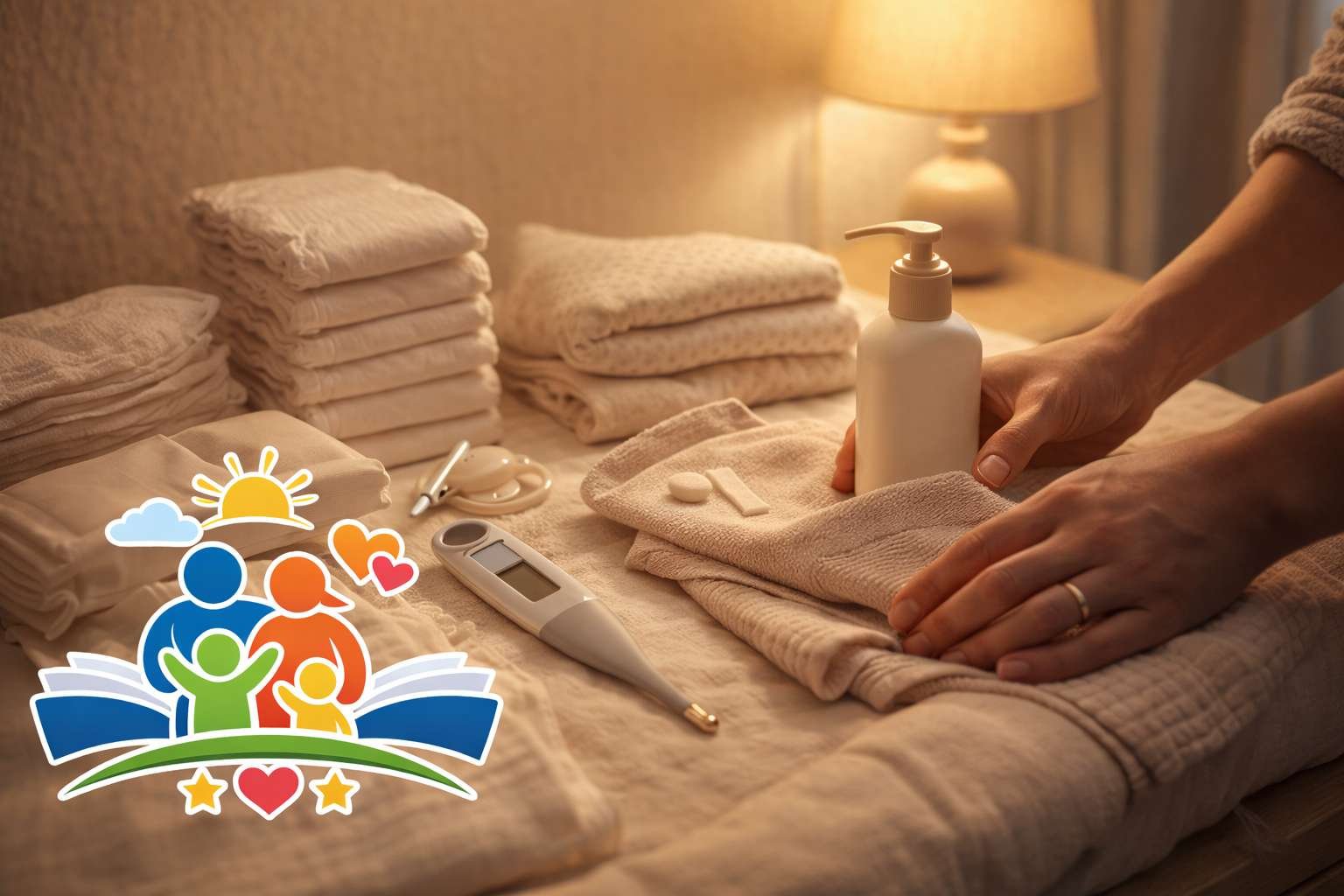
The first week home with a newborn is where confidence gets built or quietly eroded. Not because parents “don’t know enough,” but because the smallest details suddenly matter: how warm the room feels at 2 a.m., whether a feeding looks “normal,” why a diaper is different today than yesterday. The internet is loud, family advice can conflict, and the baby—perfectly—doesn’t follow scripts.
For first time parent newborn care, the goal isn’t perfection. It’s stable basics. Calm handling, clean feeding habits, safe sleep decisions, and a way to notice when something is drifting off-course. Parenting tips come alive when they reduce guesswork, not when they add pressure. Parenting tips also work best when they respect reality: exhaustion, steep learning curves, and a baby who changes by the hour.
The newborn’s first days feel small, but they set patterns
In first time parent newborn care, day one blends into night one, and suddenly you’re measuring time in feeds and naps. A simple routine—without forcing a schedule—keeps everyone steadier. Newborn care tips for first-time parents often start with tracking: not obsessively, just enough to notice what’s typical for your baby.
Watch for predictable rhythms: wake, feed, diaper, brief alert time, then sleep. That rhythm becomes a soft framework. Parenting tips that actually help focus on repeatable actions: wash hands, support the head, keep baby warm but not overheated, keep supplies where you reach them with one arm.
Long tail worries show up early. “How to bathe a newborn safely at home” sounds basic until you’re holding a slippery, wiggling human. “How often should a newborn feed at night” becomes urgent at 3:10 a.m. In first time parent newborn care, the practical answer is building a setup that makes the next hour easier than the last. Parenting tips aren’t theory when the changing station is stocked and the light is dim enough to keep baby sleepy.
And yes—repeat the obvious because tired brains drop obvious things. Parenting tips that stick are the ones you can do half-asleep.
Feeding basics without turning every feed into a test
Feeding is where confidence can wobble fastest. Newborn care tips for first-time parents should lower the temperature in the room: feeds are a pattern, not a performance. Whether it’s breast, formula, or a mix, the basics look similar—baby latches or takes the bottle, swallows, pauses, then settles.
For first time parent newborn care, it helps to watch the baby, not the clock. Hunger cues—stirring, rooting, hands to mouth—usually show up before full crying. That’s when feeding goes smoother. Parenting tips here are small: keep baby’s body aligned, take breaks for burps, and don’t rush the last ounce if baby is clearly done.
Formula-fed families often get pulled into precision anxiety. “Best bottle feeding positions for newborn reflux” matters if spit-up is frequent or baby seems uncomfortable after feeds. But don’t assume reflux from normal spit-up. Start with basics: paced feeds, upright holding after, and slow-flow nipples when needed.
A related long tail question—“newborn diaper output what is normal”—is quietly one of the best reassurance tools. Wet diapers and regular stools, in context, tell you feeding is working. First time parent newborn care becomes less scary when you have two or three clear signals that things are on track. Parenting tips should be that grounded.
Safe sleep choices that stay consistent at midnight
Sleep is where good intentions meet fatigue. The safest setup is the one you can follow at 2 a.m. without negotiation. A clear, uncluttered sleep surface, baby on their back, no loose blankets, and a firm mattress—simple, repeatable, boring. That’s the point.
In first time parent newborn care, the hardest part is consistency when baby is fussy and adults are desperate. “Safe sleep setup for newborn in small apartment” comes up because space is tight and gear piles up fast. You don’t need a perfect nursery. You need a safe place baby can sleep every time.
Temperature matters more than people expect. Overheating can make babies unsettled, and heavy layers can feel tempting. Parenting tips that help: use lightweight sleepwear and keep the room comfortable, not hot. If you’re unsure, touch the back of the neck—warm is fine, sweaty is not.
The long tail fear—“how to calm a newborn at night without overstimulation”—is real. Keep lights low, voices soft, movements slow. Treat nighttime like it’s a different world. First time parent newborn care gets easier when baby learns: night is quiet, day is brighter. Parenting tips don’t have to be dramatic to work.
Diapers, skin, and the small signals that matter
Diapers are more than cleanup. They’re a feedback loop. Newborn care tips for first-time parents should include a simple rule: notice patterns, not single moments. One odd diaper can be nothing. A trend is information.
“Newborn diaper output what is normal” sits at the center of first time parent newborn care because it’s measurable when everything else feels blurry. Wet diapers should be regular, and stools vary more than most people expect—especially across feeding types. Color and consistency can change without meaning something is wrong.
Skin care is another quiet stressor. Dry patches, baby acne, peeling—common in the early stretch. Parenting tips here are restraint-based: avoid over-washing, use gentle products, and don’t scrub. If diaper rash starts, act early: frequent changes, barrier cream, and time to air out when possible.
And then there’s the umbilical cord. “Umbilical cord care for newborn stump healing” sounds clinical until you’re staring at it, worried you’ll do something wrong. Keep it clean and dry. Let it fall off on its own timeline. If there’s spreading redness, a foul smell, or discharge that looks infected, that’s not a “wait and see” moment.
First time parent newborn care becomes calmer when you stop treating every change as a crisis and start treating it as a clue. Parenting tips should train attention, not anxiety.
Bathing and hygiene without turning it into a production
Newborn baths don’t need to be daily, and they definitely don’t need to be stressful. In the earliest days, a gentle wipe-down can be enough. “How to bathe a newborn safely at home” is mostly about setup: warm room, warm water, everything within reach before baby gets undressed.
For first time parent newborn care, the safety piece is simple but strict. Never leave baby unattended, even for a second. Support the head and neck, and keep the bath short. Babies lose heat quickly. Parenting tips that matter here are practical: lay out a towel, diaper, and clothes first, so the post-bath transition is fast.
Hair doesn’t need aggressive washing. Skin doesn’t need scrubbing. A soft cloth, mild cleanser when needed, and a calm pace usually does it. If cradle cap shows up, don’t pick at it. Gentle brushing and mild approaches tend to work better than force.
Nails, too, become a surprise. They’re sharp, and newborns scratch their faces. Trim carefully when baby is sleepy, or use a soft file. Those tiny routines—bath, nails, clean folds in the neck and thighs—become part of first time parent newborn care that feels manageable. Parenting tips aren’t about doing more; they’re about doing the right small things.
Handling, soothing, and the art of not escalating the room
Soothing isn’t a magic trick. It’s a set of moves that reduce stimulation while increasing security. The baby is learning the world; you’re learning the baby. “How to soothe a newborn with colic symptoms” is one of those searches that carries a lot of worry. Sometimes it’s colic, sometimes it’s gas, sometimes it’s just a hard stretch of evenings.
Start with body basics. Is baby hungry? Too hot? Too cold? Needing a burp? Needing a diaper change? Then go calmer: swaddle (if you’re doing it safely and baby isn’t rolling), gentle rocking, white noise, and steady holding. “How to calm a newborn at night without overstimulation” often comes down to limiting input: dim light, slow movement, quiet voices.
For first time parent newborn care, one underrated parenting tip is managing the adults in the room. Too many hands, too many suggestions, too much bouncing—baby can get more dysregulated. Choose one soothing strategy, hold it for a bit, then change if it’s clearly not working.
And when nothing works, shorten the goal. You’re not trying to create bliss. You’re trying to get from screaming to slightly calmer. Parenting tips should leave room for those messy nights without turning them into a personal failure.
Health checkpoints and when to stop debating and act
Every newborn has quirks. But there are moments when you don’t negotiate with yourself. Fever in a very young baby, trouble breathing, persistent lethargy, refusal to feed, blue-tinged lips, or signs of dehydration are not “wait until morning” questions. They’re action moments.
“Newborn jaundice signs and when to call doctor” is another common long tail phrase because jaundice is frequently discussed and easy to overthink. Mild yellowing can be typical, but it’s the degree and progression that matters. If you’re concerned, you call. You don’t crowdsource. That’s part of first time parent newborn care that deserves seriousness.
Parents also get trapped in second-guessing normal behavior: hiccups, sneezes, occasional spit-up, startle reflex. Those can be ordinary. The line is when baby seems unwell, distressed in a way that doesn’t resolve, or is changing fast. Parenting tips should protect you from both extremes: panic and denial.
Sleep deprivation amplifies fear. So build a simple checklist with your partner or support person: feeding pattern, diapers, temperature, breathing, alertness. When more than one thing is off, that’s your signal. First time parent newborn care is easier when decisions don’t depend on vibes alone. Parenting tips that improve safety are usually the ones that reduce hesitation.
Building a home routine that supports parents, not just baby
A newborn doesn’t just change a household; it rearranges it. The best newborn care tips for first-time parents include the parent infrastructure: food, rest, and clear roles. “Newborn sleep schedule by week for first month” gets searched because parents want predictability. What you can actually control is environment and response: light in the daytime, quiet at night, consistent sleep cues, and a calm approach.
In first time parent newborn care, protect the basics. Eat real meals. Drink water. Take turns sleeping when possible. Keep visitors helpful, not performative. Parenting tips that don’t mention the parents aren’t complete.
Practical systems matter. Prep a night station: diapers, wipes, cream, spare outfit, burp cloth, a bottle setup if relevant. Reduce the number of times you have to think. Decide in advance who does what when baby cries at night. Those tiny agreements prevent resentments that build quietly.
And give yourself permission to adjust. Some days the baby changes, not you. Public discussions of “perfect routines” skip the lived reality. Your job is to make the next day slightly easier. First time parent newborn care becomes stable when you prioritize repeatable habits over dramatic fixes. Parenting tips are strongest when they sound like real life, because that’s what you’re living.
Conclusion
Essential newborn care tips every first time parent aren’t about mastering everything in a week. They’re about building a steady baseline: safe sleep, calm feeding habits, clean handling, and a way to read what the baby is communicating. The early days feel intense because the feedback is constant and the stakes feel high.
But the work is cumulative. Each diaper change teaches you something. Each feed builds confidence. Each night you get through makes the next one less mysterious. Parenting tips should reduce noise, not add it. If you keep the basics consistent and treat trends as information, you’ll feel the shift—slowly—toward competence.
And when something feels truly off, you don’t bargain with that instinct. You act. First time parent newborn care is a mix of routine and judgment, both learned in real time. The goal isn’t to feel perfectly ready. It’s to keep moving with clarity, even on the tired days.
What are the most reliable parenting tips for newborn sleep safety?
Keep baby on their back on a firm, uncluttered surface. Avoid loose blankets and pillows. Parenting tips favor consistency, especially during exhausted nighttime wake-ups.
Which parenting tips help when a newborn won’t settle at night?
Dim lights, reduce stimulation, and use steady holding or gentle rocking. Parenting tips work best when you keep the room calm and predictable.
What parenting tips matter most for feeding in the first week?
Watch hunger cues, feed patiently, and burp as needed. Parenting tips focus on comfort and steady patterns, not forcing strict timing.
How do parenting tips address newborn diaper changes and skin care?
Change diapers promptly, use barrier cream if irritation starts, and avoid harsh wipes. Parenting tips emphasize prevention over chasing severe rashes.
What parenting tips help with umbilical cord stump care?
Keep it clean and dry, avoid covering it tightly, and let it fall off naturally. Parenting tips also stress watching for redness or odor.
Which parenting tips reduce stress during newborn baths?
Prepare everything first, keep the room warm, and keep baths brief. Parenting tips recommend gentle cleaning rather than frequent full washes.
What parenting tips help manage newborn gas and fussiness?
Try paced feeds, burping breaks, and gentle leg movements. Parenting tips suggest changing one variable at a time to see what helps.
Which parenting tips are best for safe swaddling?
Swaddle snug around the torso but allow hip movement, and stop swaddling once rolling begins. Parenting tips prioritize safety over tightness.
What parenting tips help parents track newborn wellbeing without obsession?
Note feeding, diapers, and alertness trends rather than single moments. Parenting tips are about noticing patterns that signal stability or concern.
How do parenting tips handle newborn spit-up versus reflux worries?
Small spit-up can be normal; watch comfort and growth patterns. Parenting tips recommend upright holding after feeds before labeling it reflux.
What parenting tips help create a simple nighttime routine?
Low light, minimal talking, and quick diaper changes keep baby sleepy. Parenting tips aim for boring consistency that signals night.
Which parenting tips are useful for daytime newborn naps?
Keep daytime brighter and slightly noisier than night. Parenting tips support gentle rhythm-building without forcing a strict schedule.
What parenting tips help when relatives give conflicting newborn advice?
Choose one safe approach and stick to it for a while. Parenting tips protect parents from constant switching that unsettles both baby and adults.
How do parenting tips suggest handling a newborn safely?
Always support head and neck, move slowly, and keep a stable hold. Parenting tips also encourage confident, deliberate handling over nervous hovering.
What parenting tips help prevent newborn overheating?
Dress baby in light layers and check the back of the neck for sweat. Parenting tips discourage heavy blankets and overly warm rooms.
Which parenting tips help with newborn nail trimming?
Trim when baby is sleepy, use gentle tools, and go slowly. Parenting tips focus on reducing scratches without turning it into a struggle.
What parenting tips address newborn jaundice concerns?
Watch for increasing yellowing and changes in alertness or feeding. Parenting tips emphasize calling a clinician when you’re unsure, not debating online.
Which parenting tips help parents share nighttime duties fairly?
Decide roles ahead of time—who feeds, who changes, who settles. Parenting tips reduce resentment by making expectations clear when tired.
What parenting tips help if a newborn feeds very frequently?
Cluster feeding can happen; keep feeds calm and watch diaper output. Parenting tips recommend focusing on comfort and overall patterns.
How do parenting tips suggest setting up a small-space newborn station?
Keep essentials within arm’s reach: diapers, wipes, spare clothes, burp cloths. Parenting tips reduce late-night scrambling and stress.
What parenting tips help when a newborn cries intensely in the evening?
Lower stimulation, try consistent soothing, and check basic needs first. Parenting tips accept that some evenings are simply harder than others.
Which parenting tips support a newborn’s day-night adjustment?
Expose baby to daylight during the day and keep nights quiet and dark. Parenting tips build cues over time rather than instant results.
What parenting tips help parents recover physically after birth while caring for baby?
Prioritize rest shifts, hydration, and simple meals. Parenting tips include protecting the recovering parent’s energy, not just baby routines.
What parenting tips clarify when to seek urgent medical help?
If baby has breathing trouble, persistent lethargy, fever, or dehydration signs, act immediately. Parenting tips treat these as non-negotiable moments.
Which parenting tips keep first-time parents from feeling overwhelmed?
Pick a few core routines and repeat them. Parenting tips work when they simplify decisions and keep the household steady, not perfect.

