
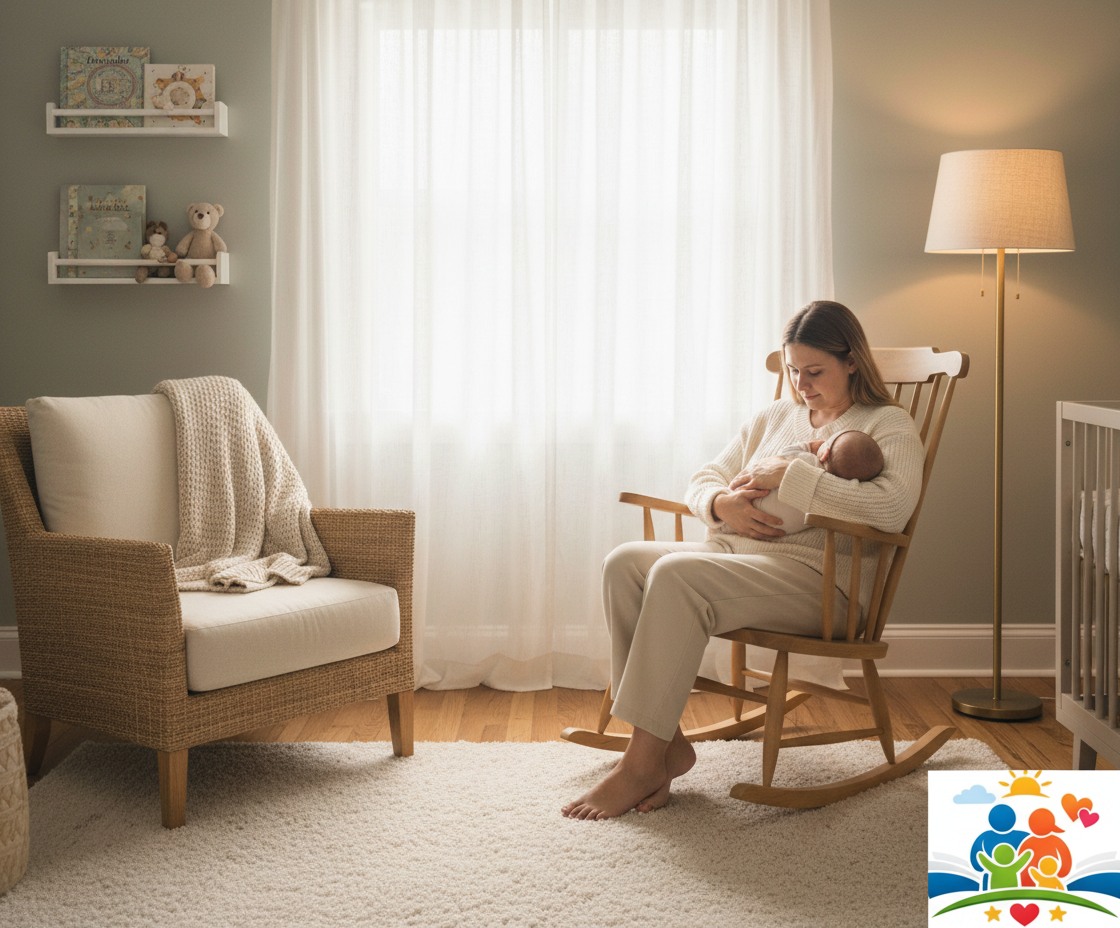
Some homes are louder than they used to be. More screens, more notifications, more people moving through small rooms. For babies, that constant churn doesn’t just feel busy—it can change how feeding goes, minute to minute. A peaceful feeding environment isn’t a luxury detail. It’s often the difference between steady, confident feeding and a cycle of fussing, gas, gulping, and unfinished bottles or distracted nursing.
Parenting tips conversations have shifted because parents are comparing notes in real time. One baby feeds anywhere. Another needs calm like it’s part of the recipe. The good news is that calm is buildable. Creating Peaceful Feeding Environments For Babies is less about perfection and more about repeating a few signals that tell a baby, “Nothing else is happening right now.”
Why babies react so strongly to feeding atmosphere
Feeding is one of the earliest moments where babies have to coordinate many things at once: sucking, swallowing, breathing, and staying regulated. Add harsh light, sudden voices, or a jarring TV laugh track, and that coordination gets shaky.
This is why Creating Peaceful Feeding Environments can look like solving a mystery. A baby may latch well in the bedroom but struggle in the kitchen. It’s not a personality flaw or a feeding “phase” you have to wait out. It’s the nervous system doing exactly what it’s designed to do—scan for safety before settling.
Parenting tips that actually work tend to focus on noticing patterns rather than forcing outcomes. If feeds go better when the room is dimmer or when movement slows, that’s information. Babies don’t need silence like a library, but they do benefit when stimulation is predictable and not competing with the feed.
Building a consistent pre-feed ritual without making it rigid
The easiest calm to achieve is the calm you repeat. A short ritual tells a baby what’s next, and it tells the adult to downshift too. You don’t need a long routine that collapses the first time you’re outside the house.
Start with one or two reliable cues. Same chair when possible. A familiar cloth on your shoulder. A quick burp cloth check. Even the same phrase in the same tone can work. This is Creating Peaceful Feeding Environments through association, not through control.
But keep it flexible. The ritual should survive real life: visitors, errands, noisy siblings. Parenting tips often fail when they require ideal conditions. A good ritual is portable. If you’re feeding in the car, you can still use the same cue—cover the bright window, lower voices, reduce motion, and create the same “small world” around the feed.
Over time, the baby starts to anticipate calm. That anticipation alone can reduce frantic latching, bottle-chomping, or pulling off repeatedly.
Light, sound, and movement: reducing stimulation without going sterile
Calm doesn’t mean bleak. It means fewer surprises. Light is one of the biggest levers. Soft, indirect light tends to help babies hold focus. Bright overhead glare can make them squint, arch, and turn away.
Sound is similar. You’re not aiming for silence; you’re aiming for a soundscape that doesn’t spike. Sudden loud voices, clanging dishes, or a TV that jumps from whisper to shouting can derail a feed. If you want background audio, choose something even: steady fan noise, gentle music, or quiet conversation that stays at one level.
Movement matters more than many parents expect. People walking in and out, pets brushing past, phones flashing—these things pull attention. Creating Peaceful Feeding Environments often comes down to controlling the traffic in the baby’s peripheral vision.
Parenting tips can be simple here: pick a “feeding zone” where movement is minimized for 15 minutes. The rest of the house can do what it needs to do. The feed gets its own boundary.
Comfort cues that help babies stay organized during feeds
Babies feed better when their bodies feel supported. That support is physical, but it’s also positional—head, neck, and torso alignment that makes swallowing easier. When a baby is twisted or sliding, they work harder. Hard work makes them restless.
Comfort cues can be small. A rolled towel supporting the arm that holds the bottle. A pillow that keeps your shoulder relaxed. A footstool so your posture doesn’t collapse halfway through. These aren’t “gear solutions.” They’re stability solutions.
Temperature is another cue. A baby who is too warm may squirm; too cold and they tense. Check the neck and back rather than hands. Clothing with easy access helps you avoid mid-feed wrestling.
Creating Peaceful Feeding Environments is also about the adult’s pace. Rushed hands make babies rush. Slow your movements. Pause before switching sides or re-offering the bottle. Parenting tips that sound obvious—like breathing—matter because babies track the adult’s body as much as the milk.
Handling distractions: siblings, visitors, pets, and phones
The real world is rarely quiet, especially in multi-child homes. Peaceful feeding doesn’t require banishing everyone. It requires managing attention and reducing the most disruptive interruptions.
If siblings are present, give them a role that doesn’t involve hovering. A quiet “helper job” can work: choosing the burp cloth, turning pages of a book beside you, or sitting in a specific spot. If visitors are around, set expectations early. Feeding time isn’t a performance.
Pets can be a bigger issue than parents admit, especially if they nudge, bark, or jump when you sit down. Close a door if you need to. That’s not mean; it’s a boundary.
Phones are the modern wildcard. A phone isn’t just a screen—it’s sudden pings, shifting light, and the adult’s attention leaving the room. Creating Peaceful Feeding Environments usually improves when the phone is placed face down and out of reach.
Parenting tips don’t need to shame here. A quick message is human. The goal is fewer micro-interruptions that break the baby’s rhythm.
Feeding outside the house: making calm portable
A peaceful feeding environment can exist in public. It just looks different. Choose corners, not centers. Face the baby away from foot traffic. Use your body to block visual chaos. A light cover or scarf can reduce stimulation without becoming a barrier between you and the baby.
If you’re bottle-feeding, bring the same bottle type and a familiar cloth. If you’re nursing, consider the same positioning support you use at home, even if it’s just a folded jacket behind your elbow.
Timing helps. Feeding before a baby becomes frantic is one of the simplest ways to keep the environment peaceful. When babies are overly hungry, they often gulp and struggle to settle. Calm is harder to build when the baby is already in distress.
Creating Peaceful Feeding Environments on the go is about small choices. Parenting tips for outings often miss that the parent’s confidence is part of the atmosphere. When you move like you have a plan—even a simple one—babies tend to follow.
When feeding becomes tense: resetting without turning it into a battle
Some feeds go sideways. A baby arches, cries, refuses, or keeps popping on and off. The mistake is pushing harder. Pressure creates noise, even if the room is quiet.
Resetting can be brief. Stop for ten seconds. Sit the baby upright. Change the angle. Offer a burp. Take a breath. If the baby is overwhelmed, a short walk in a dimmer space can help.
The goal isn’t to “win” the feed. The goal is to return to regulation. Creating Peaceful Feeding Environments includes knowing when to pause, because pauses prevent spirals.
If this happens often, look for the pattern: time of day, pace of flow, the baby’s temperament, the room’s stimulation. Parenting tips become powerful when they are specific to your baby, not generic advice that blames effort.
And if you’re seeing signs like persistent choking, significant coughing during feeds, poor weight gain, or extreme distress, it’s reasonable to bring it up with a pediatric professional. Calm is important, but so is making sure feeding mechanics and comfort are truly okay.
Conclusion
A peaceful feeding environment isn’t a decorated nursery corner with perfect lighting. It’s a set of conditions that make feeding feel safe, predictable, and unhurried—for the baby and the adult. The most effective changes are often the smallest: softer light, fewer interruptions, slower hands, less traffic in the baby’s line of sight.
Creating Peaceful Feeding Environments For Babies works best when it’s treated like a household habit, not a special occasion. Some days will still be messy. Babies grow, schedules shift, homes get noisy. Parenting tips that last are the ones that can flex without breaking, while keeping the core message intact: feeding time is allowed to be calm.
How can Parenting tips reduce feeding-time crying?
Parenting tips reduce feeding-time crying by lowering stimulation and keeping a steady rhythm, helping babies stay regulated during Creating Peaceful Feeding Environments.
What makes a room feel calm for a baby?
Soft light, predictable sound, minimal movement, and comfortable support make a room calmer, reinforcing Creating Peaceful Feeding Environments and steady feeding focus.
Can noise from TV affect baby feeding?
Yes. Sudden audio changes can disrupt sucking rhythm, so Parenting tips often recommend stable background sound during Creating Peaceful Feeding Environments.
How do I handle feeding with guests at home?
Set gentle boundaries, keep voices low, and choose one quiet spot. Creating Peaceful Feeding Environments works when interruptions are limited and predictable.
What is a simple pre-feed ritual?
A consistent cue like the same chair, cloth, or phrase signals calm. Parenting tips favor small rituals that support Creating Peaceful Feeding Environments.
Does lighting really change feeding behavior?
Bright glare can cause turning away and fussing. Softer light supports attention and comfort, strengthening Creating Peaceful Feeding Environments for babies.
How can siblings stay involved without disrupting feeds?
Give them a quiet helper role and a fixed seat. Parenting tips that work protect Creating Peaceful Feeding Environments without excluding siblings.
Should I use white noise during feeds?
If it’s steady and quiet, white noise can mask sudden sounds. It supports Creating Peaceful Feeding Environments by reducing unpredictable audio spikes.
Why does my baby feed better in one room?
Some rooms have less movement, softer light, or fewer distractions. Parenting tips encourage noticing these cues to repeat Creating Peaceful Feeding Environments.
How do I feed calmly when I’m stressed?
Slow your movements, breathe, and reduce phone interruptions. Babies track adult tension, so Creating Peaceful Feeding Environments starts with your pace.
Can feeding outside still be peaceful?
Yes—choose corners, reduce foot traffic exposure, and use familiar items. Parenting tips for outings keep Creating Peaceful Feeding Environments portable.
What should I do if baby arches and refuses mid-feed?
Pause, sit baby upright, burp, and reset. Creating Peaceful Feeding Environments includes short breaks to restore regulation, not pressure.
Do strong smells affect feeding focus?
They can. Heavy fragrances may irritate or distract babies. Parenting tips often prefer neutral scents to maintain Creating Peaceful Feeding Environments.
How can I reduce pet interruptions during feeding?
Close a door or use a baby gate. Creating Peaceful Feeding Environments improves when pets can’t bump or startle during feeds.
Is it okay to talk during feeding?
Yes, if it’s soft and steady. Calm voice can support Creating Peaceful Feeding Environments, while loud or sudden shifts can distract.
Does bottle flow speed affect calm feeding?
Fast flow can cause gulping and distress. Parenting tips often link appropriate flow to Creating Peaceful Feeding Environments and smoother coordination.
How do I prevent phone distractions during feeds?
Place the phone out of reach, face down, and silent. Creating Peaceful Feeding Environments improves when adult attention stays present.
Can a fussy baby still feed well?
Often, yes, with a calmer setup and paced rhythm. Parenting tips focus on regulation as part of Creating Peaceful Feeding Environments.
What seating helps most for calm feeds?
Supportive seating that keeps arms and back relaxed. Better posture reduces rushing, reinforcing Creating Peaceful Feeding Environments.
How long should a calm feeding zone last?
Even 10–15 minutes helps. Parenting tips suggest short protected windows to maintain Creating Peaceful Feeding Environments reliably.
What if my baby gets distracted by movement?
Turn away from busy areas and limit people passing by. Creating Peaceful Feeding Environments relies on controlling peripheral stimulation.
Is dim lighting always better?
Not always, but harsh glare rarely helps. Parenting tips recommend comfortable, soft light for Creating Peaceful Feeding Environments.
How do I reset after a stressful feed?
Change rooms briefly, lower stimulation, and restart slowly. Creating Peaceful Feeding Environments includes recovery, not blame.
Can a pacifier help create calm before feeding?
Sometimes, as a short regulation tool. Parenting tips treat it as a bridge into Creating Peaceful Feeding Environments, not a replacement for feeding.
When should I seek help for feeding distress?
If choking, persistent coughing, poor growth, or extreme refusal repeats. Creating Peaceful Feeding Environments matters, but safety and comfort come first.

